Pig house lighting is not about making barns brighter.
It is about creating a stable and durable lighting environment that works in real farm conditions.
Once farms understand that lighting affects pig welfare and productivity, the next step becomes practical.
What kind of light is suitable for pig houses?
What technical requirements matter most?
And how should the system be installed to last?
This guide focuses on requirements, spectrum use, and installation tips for modern pig farming.
Why Pig House Lighting Needs Special Design
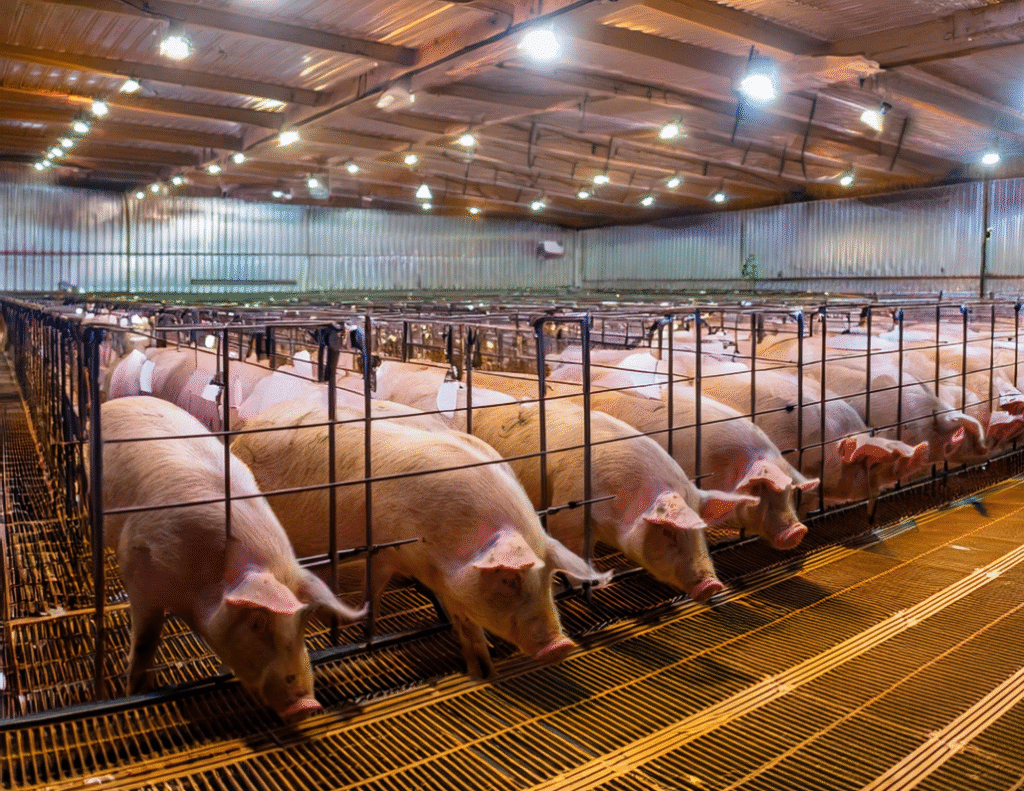
Pig houses are harsh environments.
High humidity, dust, and ammonia quickly damage standard indoor lighting.
According to the FAO, housing environment factors such as humidity and air quality play a critical role in livestock management.
In practice, many pig barns experience lighting failure not because of the LED chip itself, but because seals, connectors, or housings degrade first.
That is why pig house lighting must meet stricter technical standards than ordinary agricultural buildings.
Key Requirements for Pig House Lighting
Ammonia Resistance
Ammonia is the biggest challenge in pig barns.
It corrodes plastic, metal parts, and electronic components over time.
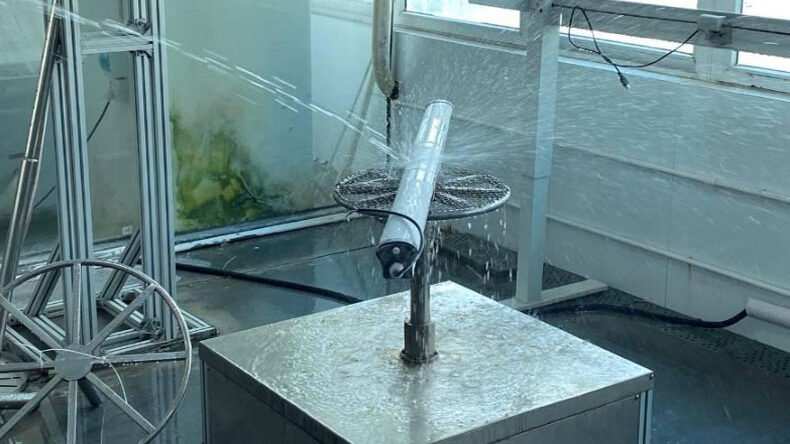
Lighting fixtures should use corrosion-resistant housings and sealed structures.
In barns with frequent washing or limited ventilation, failures often appear first at joints and cable entries.
Waterproof and Dustproof Protection
Pig houses are washed regularly.
Moisture and dust are constant.
Most farms require lighting fixtures rated IP65 to IP69K.
This level of protection prevents water and dirt from entering the fixture during cleaning.
The IP rating system is defined by the International Electrotechnical Commission (IEC).
Flicker-Free Output
Pigs are sensitive to unstable light.
Even flicker invisible to humans can increase restlessness.
A proper pig lighting system must deliver smooth, flicker-free output at all brightness levels.
Research on pig behavior and housing environments shows that stable lighting conditions help reduce stress and support safer movement within barns.
Uniform Light Distribution
Uniformity matters more than raw brightness.
In practice, many pig barns perform better at moderate light levels with even coverage than at higher lux with strong shadows.
Uneven lighting creates dark zones and bright spots, which affects movement and behavior.
Mechanical Durability
Pig barns are active spaces.
Fixtures must resist vibration, accidental impact, and daily wear.
Higher IK ratings help reduce breakage and maintenance frequency.
Pig Lighting Spectrum Explained (Practical View)
Pig lighting does not require complex spectrum control.
Simple and correct use of light color is usually enough.
White Light for Daily Activity
Neutral or cool white light is suitable for feeding, inspection, and daily work.
It supports normal activity without overstimulation.
Red Light for Calm Conditions
Red light is often used during nighttime checks or in farrowing areas.
It allows staff to move without disturbing resting pigs.
Blue Light for Handling Situations
Blue light can help calm pigs during handling or transport preparation.
It is typically used temporarily, not as the main lighting mode.
For most pig houses, a white-based system with optional red lighting is sufficient.
Complex multi-spectrum control is rarely needed unless the barn has specific management requirements.
Recommended Light Levels in Pig Houses
There is no single lux value for every barn.
However, general guidelines help maintain consistency.
- Living areas: moderate, uniform brightness
- Working zones: higher light for safety
- Night periods: reduced light, often with red spectrum
- Gradual transitions are important.
Sudden on/off switching should be avoided.
Installation Tips for Pig House Lighting
Even high-quality fixtures perform poorly if installed incorrectly.
Good installation ensures reliability and long service life.
Choose the Right Fixture Type
Linear LED fixtures are commonly used in pig houses.
They provide wide and even light distribution.
Industrial-grade fixtures are often selected for corridors, feed rooms, and utility areas.
Mounting Height and Spacing
Most pig barns install lights at 2.5–3.5 meters, depending on layout.
Consistent spacing prevents glare and dark zones.
Plug-and-Play Wiring
Modern systems use male and female connectors instead of hard wiring.
This reduces installation time and wiring errors.
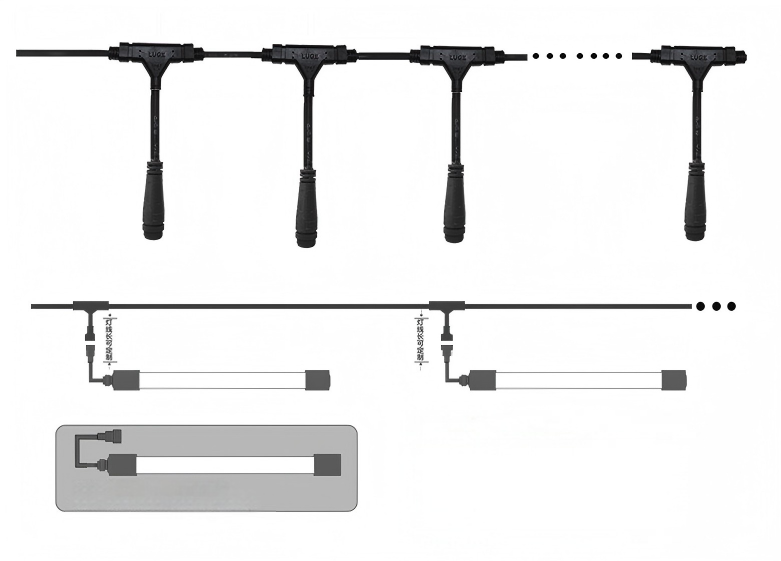
On large farms, plug-and-play wiring also makes future expansion or partial replacement much easier.
Clip Mounting vs Suspension
Clip mounting is ideal for linear fixtures and fast replacement.
Suspension mounting works better in tall or open structures.
Maintenance Planning
- Clean fixtures periodically to remove dust
- Check seals and connectors during washdowns
- Replace individual fixtures instead of entire lines
Simple planning reduces downtime and labor cost.
Common Mistakes to Avoid
Common mistakes we often see in pig house lighting projects include:
- Using standard indoor LED lights
- Ignoring ammonia corrosion
- Installing fixtures too far apart, creating dark zones
- Sudden on/off switching without dimming
- Mixing incompatible drivers and fixtures
Avoiding these mistakes saves time and replacement cost.
Conclusion
Pig house lighting is about durability, stability, and correct installation.
A simple checklist-based approach—focusing on sealing, uniformity, and installation—often delivers better results than chasing higher wattage or complex controls.
With the right system and setup, lighting becomes a long-term asset instead of a recurring problem.
FAQ
How many lux does a pig house need?
Most pig houses perform well with moderate, uniform light rather than high brightness.
Do pigs react to flicker?
Yes. Flicker can increase stress and restlessness.
Is ammonia resistance really necessary?
Yes. Without it, fixtures degrade quickly in pig barns.
Can LED lights be dimmed in pig houses?
Yes, as long as the system supports smooth, flicker-free dimming.