
Low-voltage LED lighting is widely used in poultry houses for safety.
But in long chicken houses, many farms face a common problem:
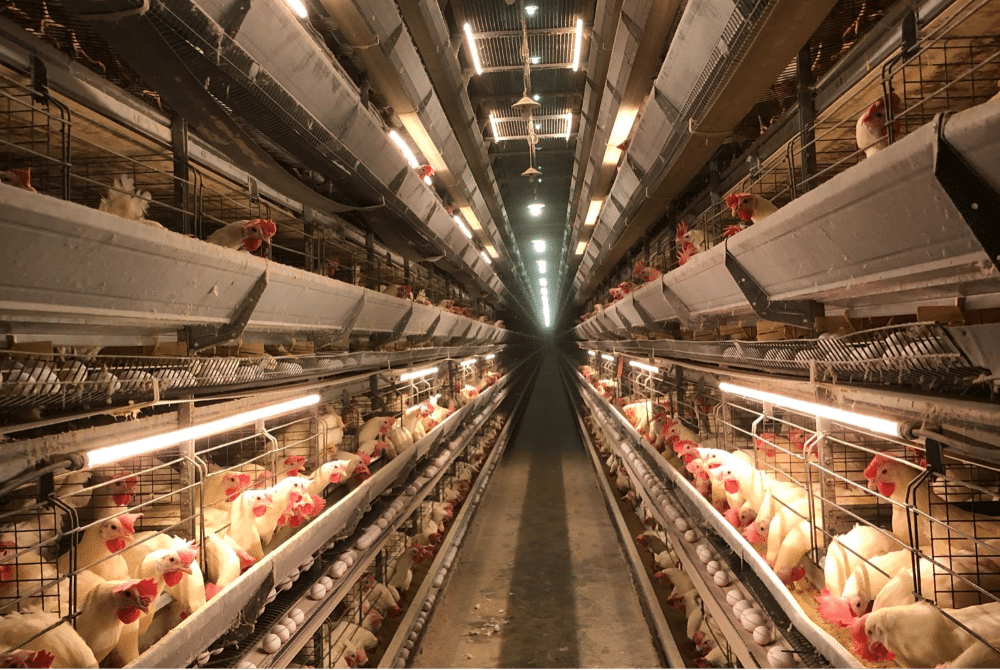
lights at the front are bright, while lights at the far end become dim.
This is caused by voltage drop, and without proper system design, it can seriously affect lighting uniformity and bird performance.
What Is Voltage Drop in Poultry Lighting
In low-voltage systems, electricity loses strength as it travels through long cables.
As a result:
- Voltage gradually decreases along the line
- Lamps at the end receive less power
- Brightness becomes uneven
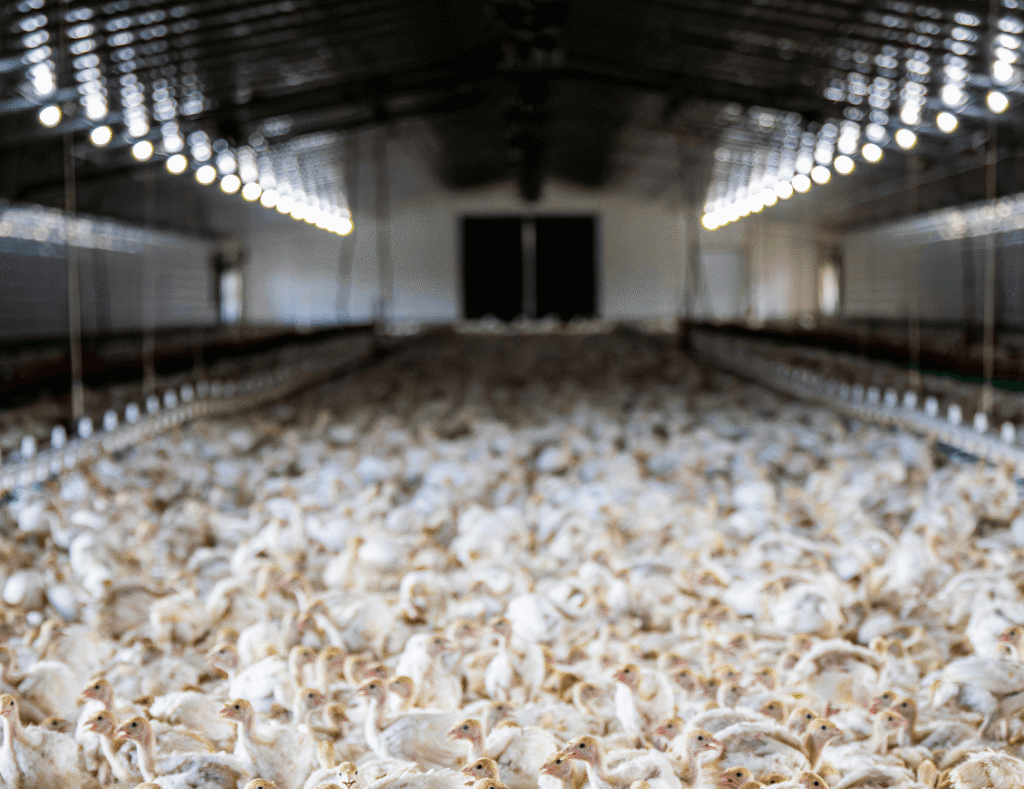
In long poultry houses with many lights connected in one circuit, the difference can become very obvious — sometimes over 50%.
Why Voltage Drop Is So Common in Chicken Houses
Voltage drop becomes a real issue because:
- Poultry houses are often 100–150 meters long
- Many fixtures run on one continuous line
- Lights operate for long hours every day
- Low voltage means higher current in the cables
Without a well-designed power system, uneven lighting is almost unavoidable.
Why Traditional Fixes Don’t Truly Solve the Problem
Some systems try to reduce voltage drop by:
- Lowering lamp wattage
- Feeding power from the middle of the line
- Using different wattages along the cable
These methods may reduce visible brightness differences, but they do not remove voltage drop itself.
They only balance it temporarily and often create new issues such as lower light levels or higher wiring cost.
Poor lighting system design often leads to hidden maintenance and performance costs.
Why PWM Dimming Struggles in Long Poultry Houses
PWM dimming controls brightness by rapidly switching the power on and off.
While common in basic LED systems, it has clear limitations in large poultry houses:
- Unstable light at very low brightness levels (2–3 lux needed in farming)
- Heat buildup in higher-power fixtures
- Faster voltage loss over long cable runs
- Electromagnetic interference affecting sensors and controllers
Because of these issues, PWM dimming is rarely ideal for long poultry lighting systems.
How Carrier-Based Control Solves Voltage Drop Effectively
Carrier-based lighting systems use:
- Wide-voltage constant-power LED drivers
- Built-in communication chips inside each lamp
Control signals are transmitted through the same power cables — no extra signal wires are needed.
Even when voltage drops along long cable runs:
- Each lamp maintains stable power
- Brightness stays uniform from front to end
- Dimming remains precise across zones
- Light color and intensity can be adjusted when needed
This approach keeps the safety of low-voltage systems while eliminating uneven brightness.
Leading agricultural lighting companies are also emphasizing system-level design for uniform and stable barn lighting.
For these reasons, carrier-based lighting is increasingly used in modern poultry farms.
Practical Design Tips for Long Chicken Houses
To avoid voltage drop issues:
- Divided lighting lines into shorter power sections
- Use proper cable thickness for total load
- Avoid feeding too many lamps from a single point
- Choose lighting systems designed for long agricultural buildings
- Good lighting performance starts with good electrical design.
Final Thoughts
Voltage drop is not a flaw of low-voltage poultry lighting.
It is a system design issue.
Traditional methods only reduce the symptoms.
Carrier-based constant-power systems address the real cause.
When properly designed, low-voltage poultry lighting can deliver:
- Safe operation
- Uniform brightness
- Stable long-term performance