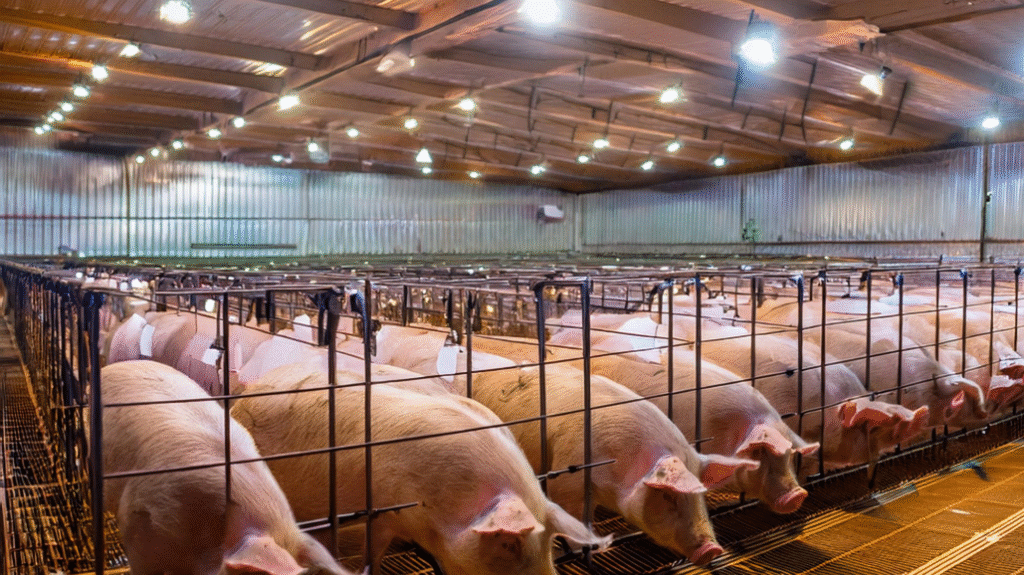
Lighting is one of the most important—and most overlooked—parts of modern pig farming. Good lighting helps pigs stay calm, grow better, and move safely inside the barn. It also makes routine work easier for the farm team. With LED technology improving every year, many farms are upgrading their barns to more reliable and efficient lighting systems.
In this guide, we introduce the top 5 pig barn lighting solutions for modern swine operations. You will also find practical tips on how to choose the right lighting system and how to set up your barn for better performance.
Why Lighting Matters in Pig Barns
Pig barns are challenging environments. They are humid, dusty, and often contain high ammonia levels. Poor lighting can cause uneven growth, stress, and safety issues. Modern LED systems solve these problems with:
- Flicker-free output
- Even light distribution
- Ammonia-resistant materials
- High waterproof ratings (IP65–IP69K)
Research from FAO shows that lighting is strongly linked to animal welfare and overall production efficiency.
For farms planning to upgrade, lighting is often the simplest improvement with the fastest return.
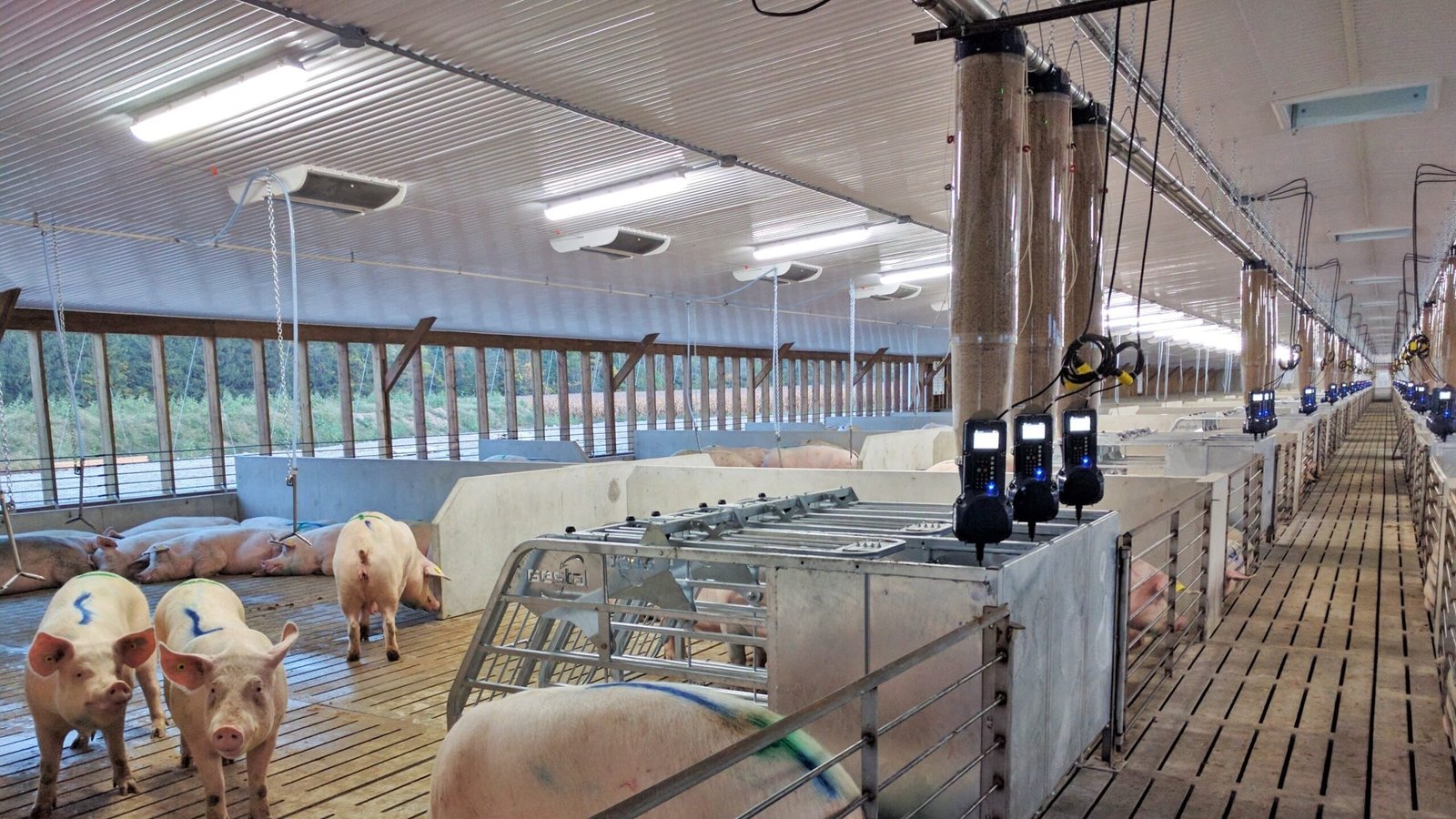
What Pig Barn Lights Must Have
Before choosing a solution, pig barns require four essential features:
1. Ammonia resistance
Pigs produce high levels of ammonia. Lighting fixtures must withstand corrosion.
2. Waterproof sealing
IP65–IP67 prevents damage from washing, humidity, and dust.
3. Flicker-free output
Pigs react negatively to flicker. It increases stress and reduces welfare.
4. Easy installation
Plug-and-play connectors and clip mounting reduce installation time and maintenance.
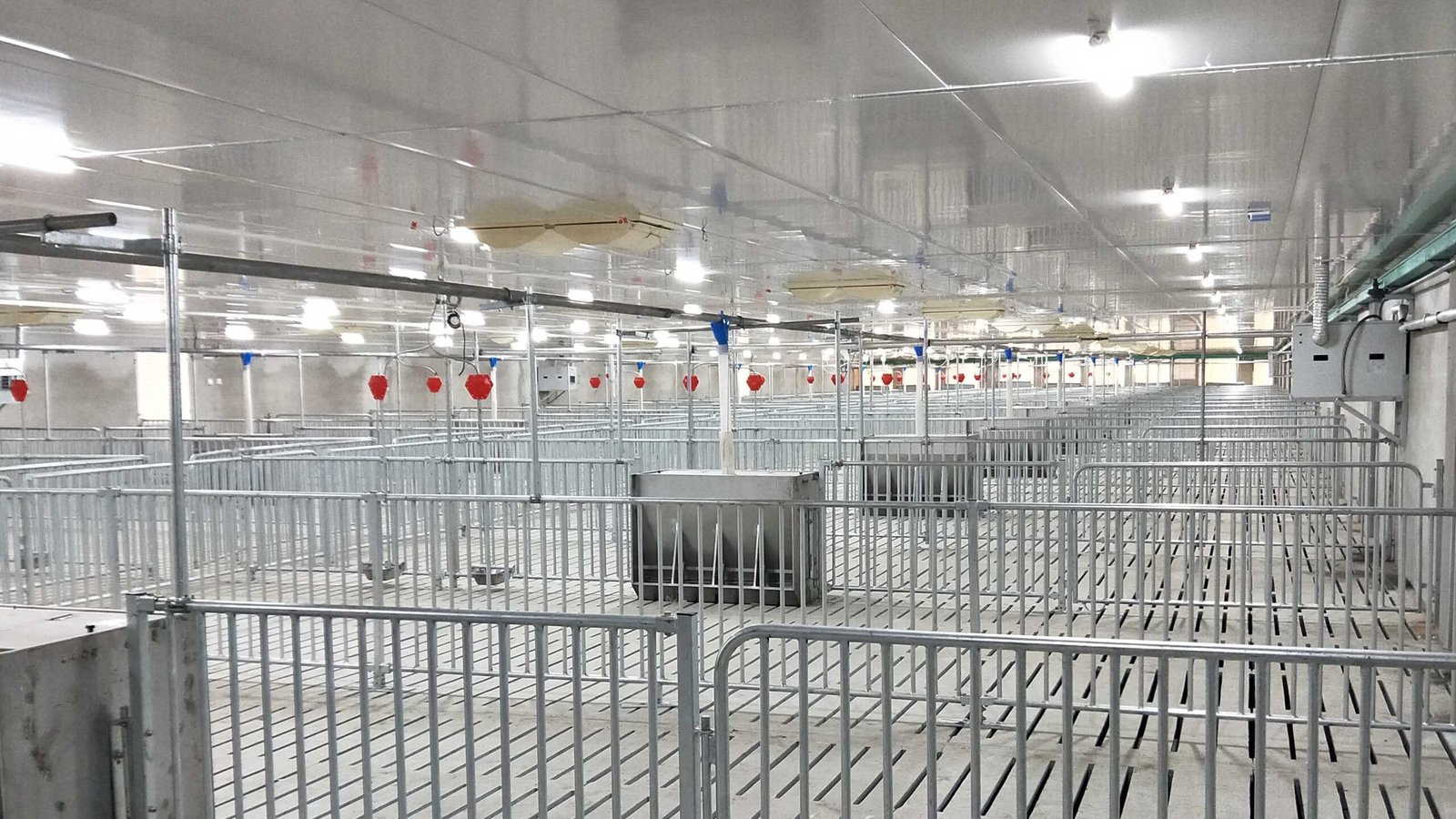
These points are the foundation for selecting any lighting system.
Top 5 Pig Barn Lighting Solutions for Modern Swine Farming
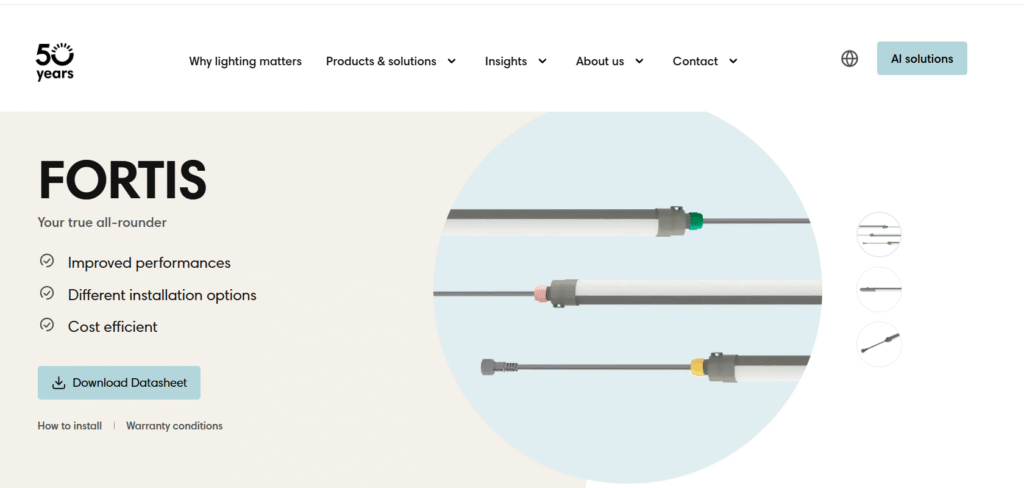
1. HATO Pig Lighting Solutions (Netherlands)
Website: https://www.hato.lighting/en/lighting-solutions/animal-lighting/pig-lighting
HATO focuses on animal-friendly lighting. Their systems are used in large European pig farms. The lights provide stable output, high uniformity, and durable components designed for long-term use.
Key Features
Animal-focused lighting spectrum
High uniformity and low glare
Strong European build quality
2. ZALUX ALTUMA (Spain)
Website:https://www.zalux.com/product/zalux-10228103-altuma-mxb-65-840-etdd-r/
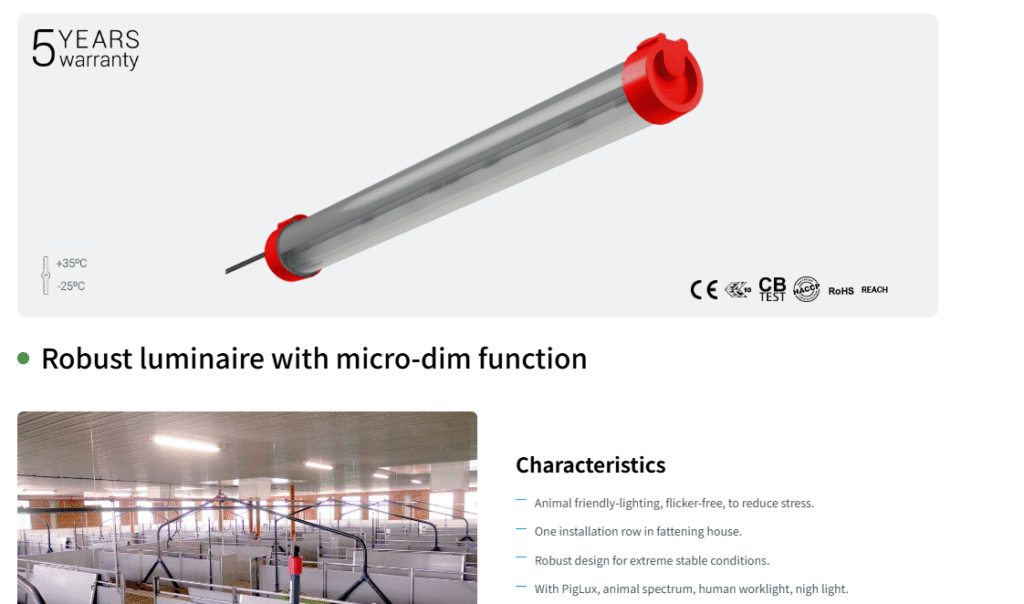
ZALUX is well-known for industrial-grade durability. Their ALTUMA series is often used in high-corrosion barns. The fixtures feature a strong IK10 impact rating and IP66/69K protection.
Key Features
- Fully sealed body
- Excellent resistance to ammonia
- Long lifespan
- Suitable for harsh climates
3. AmberAgri Swine Lighting System
Website: https://amberagri.com/pig-lighting/
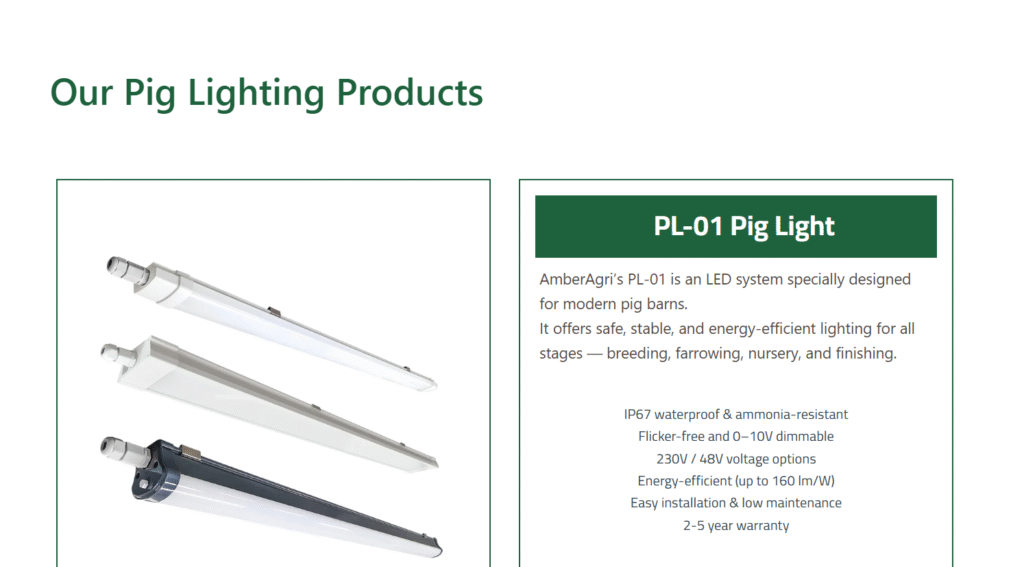
AmberAgri offers a practical lighting system designed specifically for pig barns. The lights are fully sealed, anti-corrosion, and operate with flicker-free output. Most farms appreciate the plug-and-play connectors and clip mounting, which make installation fast.
Key Features
Soft, stable light for pig comfort
High IP rating for wet and dusty barns
Ammonia-resistant PC housing
Easy-to-replace modular design
Best For: Farrowing rooms, nursery barns, and finishing houses.
4. Hontech-Wins Waterproof LED Tubes (China)
Website: https://www.szhontech.com/product-6.html
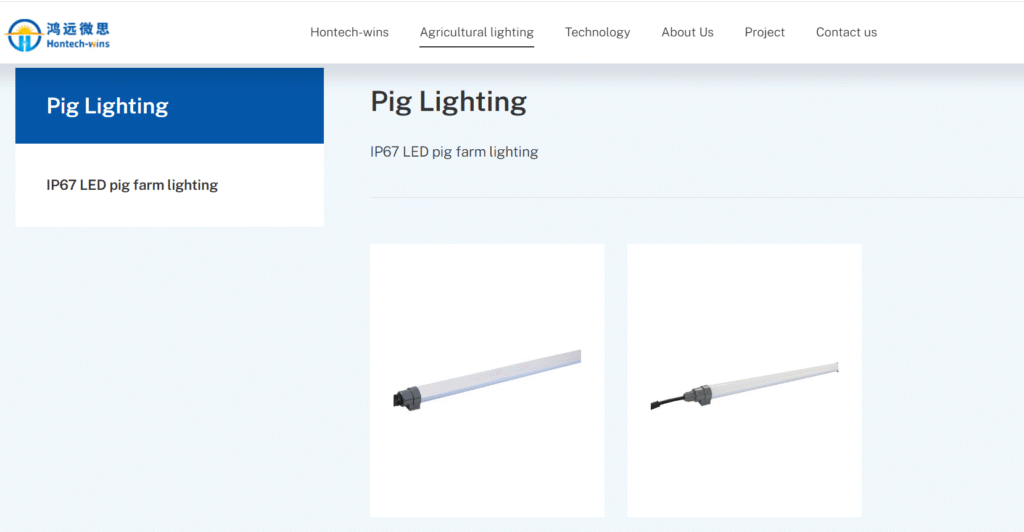
Hontech provides waterproof LED tubes widely used in large livestock houses. Their T12/T8 tubes have strong sealing and stable drivers suitable for pig production.
Key Features
Waterproof and corrosion-resistant
Affordable for large-scale farms
Stable brightness and wide coverage
Best For: Nurseries, grower-finisher barns, and cost-sensitive projects.
5.AgriLED / EcoLighting – Practical LED Options for Pig Farms
Website: https://www.ecolightinguk.com/
AgriLED and EcoLighting are widely used in UK and Northern European pig farms. Their lights focus on durability, waterproof design, and energy efficiency—ideal for barns that need a simple and reliable upgrade.

Key Features
- Strong waterproof and dustproof structure
- Low energy consumption for long-hour operation
- Good resistance to humidity and corrosion
Best For:
Corridors, storage rooms, walkways, and general barn lighting upgrades.
How to Choose the Right Pig Barn Lighting
Selecting the right lighting depends on your barn layout and farm goals. Here are simple guidelines:
1. Choose based on barn type
- Farrowing: low glare, soft light
- Nursery: flicker-free, moderate brightness
- Grower-finisher: uniform light without shadows
2. Consider ammonia levels
Heavy ammonia means you need higher-grade materials and stronger sealing.
3. Look for easy installation
Plug-and-play connectors and clip mounting reduce installation time—important for large barns.
4. Think about maintenance
Longer lifespan and easy access reduce labor costs.
AmberAgri offers solutions for farms that want simple installation and lower maintenance costs.
Basic Setup Guide for Pig Barn Lighting
You don’t need a complicated system to get good results. Here is a simple setup approach:
Mounting Height
Most barns place lights at 2.5–3.5 meters for even coverage.
Light Spacing
Linear lights spaced 2–3 meters apart work well in nursery and finisher barns.
Plug-and-Play Installation
Modern systems use male/female connectors. This reduces wiring errors and improves safety.
Clip Mounting
Install clips first, then snap the fixtures into place.
Easy for farm staff and minimal downtime.
Maintenance Tips
Wipe dust every few months
Check connectors during seasonal cleaning
Replace modules if brightness drops
External reference on barn lighting best practices:
Philips Agriculture Lighting Insights
Conclusion
Pig barns need lighting that can handle moisture, dust, and ammonia while keeping pigs calm and productive. The five solutions listed above offer different strengths—durability, cost efficiency, or advanced animal-focused design.
A good lighting system improves growth, welfare, and farm efficiency. For farms planning upgrades, lighting is one of the easiest ways to make a meaningful improvement.
If you want a customized lighting layout, visit our pig lighting page for more information.
FAQ
1. How many lux do pig barns need?
Most barns use 80–120 lux in working areas and 60–100 lux in living areas.
2. Why do pig barns need ammonia-resistant lights?
High ammonia corrodes plastic and metal parts. Special materials extend lamp lifespan.
3. Can normal LEDs be used in pig houses?
Not recommended. They fail quickly due to moisture and ammonia.
4. Are pigs sensitive to flicker?
Yes. Flicker causes stress and discomfort. Always choose flicker-free drivers.